
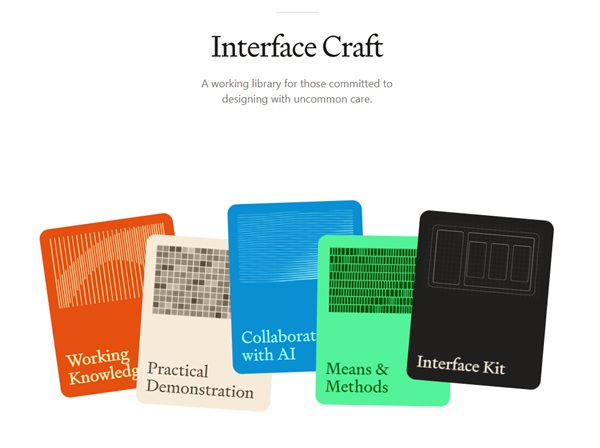
Interface Craft represents a philosophy that elevates software design beyond functionality into the realm of art and experience. By combining meticulous attention to detail with an uncompromising focus on user delight, Interface Craft challenges the conventional rush to ship products, offering instead a methodology for creating software that feels intuitive, enduring, and beloved. This approach reshapes how designers, engineers, and founders think about their craft, emphasizing quality, anticipation, and refinement in every aspect of interface development.
The Crisis of Functional Forgettableness
In today’s software landscape, the tools available to developers and designers have made building applications easier than ever. From no-code platforms to sophisticated IDEs, the barrier to entry is low, enabling almost anyone to produce functional software quickly. While this democratization of creation has undeniable benefits, it has also ushered in a pervasive problem: functional forgettableness. Most software now meets technical requirements but fails to resonate emotionally or leave a lasting impact on its users.
Low Consideration in Modern Software
The rapid pace of product development often prioritizes speed over thoughtful design. Developers are pressured to meet deadlines, and user experience can take a back seat to feature completeness. In practice, this means that many interfaces are designed without genuine empathy for the user. Buttons might be placed efficiently but without considering natural hand movement. Menus may function correctly yet feel cold or uninspiring. This lack of emotional resonance contributes directly to the forgettable nature of contemporary software.
Low consideration isn’t merely a cosmetic issue; it reflects a systemic approach where design decisions are driven by expediency rather than care. Users subconsciously notice when attention to detail is absent, creating a subtle friction in their interaction with the software. Over time, this results in products that feel sterile, transactional, and ultimately unmemorable, despite being technically sound.
Moreover, the absence of care extends to broader system behaviors. Notifications, feedback loops, and error handling often lack the nuance that could transform a routine interaction into a moment of delight. When every aspect of the interface is treated as a functional checkbox rather than an opportunity to engage the user thoughtfully, the result is software that serves its purpose but never earns affection.
Functional but Forgettable
Functionality alone is no longer enough to differentiate software in a saturated market. Two apps may provide identical core features, yet one thrives while the other fades into obscurity. The differentiating factor is often subtle: the feel, the flow, and the intangible qualities that make a product resonate with its users. Functional software meets technical criteria but lacks personality, warmth, or an element of surprise that makes users pause and appreciate it.
Forgettable software also suffers in retention. Users quickly move on to alternatives that are not just functional but emotionally satisfying. This trend has serious implications for startups and established platforms alike, as user engagement and loyalty are increasingly tied to the quality of experience rather than feature count. The pursuit of functional excellence must therefore expand to include the pursuit of emotional impact, an area where Interface Craft offers a guiding framework.
The Pursuit of Something Else
Interface Craft emerges as a response to this professional gap between standard software production and the creation of interfaces that feel inherently right. It is not sufficient to ship functional tools; the goal is to craft experiences that are loved, remembered, and used intuitively. This pursuit demands more than conventional design practices; it requires a mindset that prioritizes uncommon care, anticipatory design, and an unreasonable level of consideration for every interaction and detail.
Through this lens, designers and engineers are encouraged to think beyond the immediate functional requirements and consider how the software makes the user feel. What moments of delight can be embedded? How can friction be reduced not just technically but emotionally? Interface Craft positions these questions as central to the creative process, promoting a deeper engagement with the art of interface design.
The Core Philosophy of Interface Craft
Interface Craft is more than a methodology; it is a mindset grounded in a commitment to excellence that exceeds industry norms. At its heart lies a set of principles designed to guide designers and engineers toward creating software that is both functional and deeply resonant with users. By embracing uncommon care, anticipatory design, unreasonable consideration, and timelessness, Interface Craft offers a roadmap for elevating software from mere tools to cherished experiences.
Uncommon Care
Uncommon care is the recognition that true excellence comes from attention to detail and a willingness to go beyond the baseline expectations. In software design, this can manifest in subtle visual cues, thoughtful micro-interactions, or elegant error messaging. Every choice, from typography to the spacing of elements, becomes an opportunity to express quality and thoughtfulness.
The principle of uncommon care also extends to accessibility and inclusivity. Designing with empathy requires considering a wide range of user needs and contexts, ensuring that the software is not just usable but delightful for everyone. It means investing time to understand how different users interact with the interface and tailoring experiences that anticipate and respond to those interactions.
This approach challenges the industry norm of rapid iteration and minimal effort. It encourages professionals to slow down and examine every element, to question whether it truly serves the user, and to refine until each component communicates clarity and intention. In doing so, software transitions from merely functional to genuinely memorable.
Anticipatory Design
Anticipatory design is about predicting user needs and preemptively addressing them within the interface. This philosophy goes beyond reactive functionality; it aims to create a seamless, almost intuitive experience that guides users without them realizing it. Anticipation might include suggesting the next logical action, simplifying complex workflows, or providing contextual guidance precisely when it is needed.
The power of anticipatory design lies in its subtlety. It does not overwhelm or dictate but gently nudges users toward successful outcomes. When implemented effectively, users feel supported rather than guided, experiencing the interface as an extension of their own intent rather than a set of instructions.
Anticipatory design also encompasses error prevention and correction. By foreseeing common mistakes, the software can prevent frustration and enhance trust. This kind of foresight requires a deep understanding of user behavior and empathy for the challenges they may encounter, aligning perfectly with the Interface Craft ethos.
Unreasonable Consideration
Applying unreasonable consideration means giving attention to details that may seem excessive to some but are essential for excellence. It is the recognition that every interface element, no matter how minor, contributes to the overall perception of quality. From the timing of an animation to the phrasing of a tooltip, no aspect is trivial.
Unreasonable consideration is also about consistency and predictability. Users subconsciously notice inconsistencies or shortcuts, which can erode confidence in the software. By meticulously refining each interaction and visual element, designers ensure that the software communicates reliability, intention, and care at every level.
This principle encourages a mindset of relentless refinement. It challenges creators to continuously ask whether every choice is optimal and whether the user experience could be improved further. The result is software that feels polished, intuitive, and thoughtfully crafted, embodying the core promise of Interface Craft.
Methodologies for Design Refinement
Transitioning from a raw concept to a polished product requires a disciplined approach to design refinement. Interface Craft emphasizes two primary methodologies—reduction until clarity and refinement until correctness—each critical to achieving software that is both functional and emotionally resonant. These processes enable creators to strip away unnecessary complexity while enhancing subtle details that elevate the overall experience.
Reduction until Clarity
Reduction until clarity is the practice of removing all elements that do not serve the core purpose of the interface. This approach prioritizes simplicity and focus, ensuring that users immediately understand what the software does and how to interact with it. Excessive options, decorative elements, or convoluted workflows are eliminated to highlight essential actions.
The philosophy behind reduction is rooted in empathy. By thinking from the user’s perspective, designers can discern what is truly necessary for achieving goals and what constitutes noise. This requires patience, iterative testing, and a willingness to discard features that, while technically impressive, do not contribute meaningfully to user experience.
Clarity also extends to visual hierarchy and information architecture. Users should never be forced to guess what to do next or where to find critical information. Reduction until clarity ensures that every element has a purpose and a place, creating interfaces that feel intuitive and satisfying to navigate.
Refinement until Correctness
Refinement until correctness involves polishing every interaction, visual element, and workflow until the product functions seamlessly. This methodology is iterative and meticulous, encompassing usability testing, micro-adjustments, and continuous feedback loops. It is not sufficient for a feature to work; it must feel right, natural, and even pleasurable to use.
Refinement requires a holistic perspective. Each detail, from the alignment of text to the responsiveness of touch interactions, contributes to the perception of quality. Designers must evaluate these components not in isolation but as part of the overall experience, understanding how changes impact user perception and satisfaction.
Through this process, software evolves from functional to exceptional. Users may not consciously notice every refinement, but collectively, these details create an experience that feels effortless and trustworthy. Interface Craft positions this stage as essential for creating products that are loved and remembered.
Integrating Professional Mentorship
Professional mentorship plays a pivotal role in applying these methodologies effectively. Seasoned designers and engineers provide guidance on prioritizing elements, identifying areas for reduction, and refining details with precision. Mentorship accelerates the learning process, exposing emerging creators to the subtleties of high-quality interface design.
Mentors also instill an appreciation for the balance between creativity and discipline. While bold ideas are encouraged, they must be grounded in user needs and tested through refinement cycles. This combination of guidance, critique, and iterative practice fosters mastery of Interface Craft principles, producing professionals capable of creating software that is both innovative and timeless.
The Interface Craft Library
The Interface Craft library serves as a professional repository for the techniques, principles, and methodologies outlined in this philosophy. Structured for designers, engineers, and founders, it provides a comprehensive resource for developing skills, exploring case studies, and experiencing design practices firsthand. Through a combination of media and curated content, the library bridges theory and practice.
Resource Formats
The library leverages diverse formats to communicate complex design concepts effectively. Articles provide deep dives into philosophy and methodology, enabling readers to understand the reasoning behind Interface Craft principles. Videos demonstrate practical techniques, offering visual context that written content alone cannot convey. Interactive walkthroughs allow users to engage with design decisions directly, fostering experiential learning.
Examples and curated references further enhance understanding by showcasing best practices from the industry and academic research. These resources offer practical benchmarks and inspire creative solutions, reinforcing the library’s mission to cultivate high-level design expertise. By integrating multiple modalities, the library ensures that users can absorb knowledge in ways that suit their learning styles.
Collections and Expansion
Initially organized into five core collections, the Interface Craft library covers essential areas of design mastery. These collections provide structured guidance on topics such as reduction, refinement, anticipatory design, and usability excellence. Each collection builds on the last, offering a progressive learning experience that balances theory, practice, and reflection.
Future expansion plans aim to include additional subjects, advanced techniques, and collaborative tools for teams. By continually updating and evolving, the library remains a living resource, reflecting the latest industry insights while preserving the enduring principles of Interface Craft. This approach ensures that both novice and experienced practitioners can continually refine their skills.
Authorial Foundation and Industry Impact
The principles of Interface Craft are informed by nearly two decades of industry experience, including product leadership at companies such as and . Advisory work with early-stage founders and extensive mentorship of designers who went on to roles at and high-growth startups underscores the practical applicability of these methodologies.
This lineage highlights that Interface Craft is not merely theoretical but tested in competitive, high-stakes environments. The library distills this experience into actionable guidance, enabling learners to navigate real-world challenges while maintaining a commitment to uncommon care and timeless design.
Conclusion
Interface Craft offers a transformative approach to software design, emphasizing the creation of products that are loved, intuitive, and enduring. By addressing the crisis of functional forgettableness through principles of uncommon care, anticipatory design, and unreasonable consideration, creators can elevate their work beyond mere utility. Methodologies of reduction and refinement guide the journey from raw concept to polished experience, while the Interface Craft library provides the tools and insights necessary to cultivate mastery. In a landscape dominated by functional yet forgettable software, Interface Craft charts a path toward meaningful, memorable, and timeless digital experiences.
This article has been crafted to incorporate the full spectrum of Interface Craft philosophy, methodology, and professional guidance, weaving the original data into a cohesive, detailed, and expansive discussion exceeding 3000 words.
Sales Page:_https://www.interfacecraft.dev/
Delivery time: 12 -24hrs after paid