
The visionary work of August Bradley has profoundly influenced the landscape of personal and professional development, notably through the creation of the Architecting Momentum framework and its cornerstone, the Pillars, Pipelines & Vaults (PPV) Life Operating System. This comprehensive solution, rooted in the flexible and powerful Notion platform, offers a transformative pathway for individuals seeking to transcend the common pitfalls of fragmented productivity and reactive living, charting a definitive course towards intentional success and sustained growth.
August Bradley
The journey of August Bradley into the realm of personal systems design began with a simple yet pervasive observation: a widespread state of “quiet frustration” amongst individuals who, despite consuming endless productivity content and making ambitious plans, still felt themselves standing still. This stagnation wasn’t a failure of ambition, but rather a systemic flaw in the very tools and methodologies they employed.
It illuminated a critical need for a new approach, one that could bridge the chasm between high-level aspirations and the mundane reality of daily actions. August Bradley identified fragmented toolsets, where a multitude of disconnected applications like Evernote, Todoist, Obsidian, Trello, and Google Docs created friction and prevented a unified view of one’s life. He also pinpointed reactionary living, an erratic and impulsive approach that left individuals perpetually responding to external pressures rather than proactively shaping their own destinies.
Perhaps most crucially, he recognized the “execution gap”—the painful disconnect between knowing what to do and actually doing it, often a result of a lack of structured accountability and focused action. It was this deep understanding of these core failures, coupled with the inherent limitations he perceived in traditional frameworks such as Getting Things Done (GTD), that galvanized August Bradley to engineer a fundamentally different solution. His ambition was not merely to optimize tasks, but to redesign the entire operating system of an individual’s life.
The Genesis of a Life OS – From Stagnation to Systematization
The problem statement articulated by August Bradley resonates deeply with many in the modern era, trapped in a paradox of abundant productivity tools yet feeling increasingly overwhelmed and stagnant. This “quiet frustration” is a silent epidemic, where the desire for progress clashes with the reality of fragmented efforts. Individuals find themselves gathering vast amounts of information, setting grand goals, and even starting numerous projects, only to see them languish unfinished or unintegrated.
The sheer volume of disconnected applications, each serving a specific niche—note-taking, task management, project tracking—creates a digital labyrinth rather than a clear path. Each tool demands its own context, its own setup, often leading to a situation where the effort of managing the tools outweighs the benefit of using them. This digital chaos fuels reactive living, where decisions are made on impulse or based on the latest urgent email, rather than being strategically aligned with core values and long-term objectives. The execution gap, the persistent failure to translate intention into action, becomes a source of self-blame and demotivation, fostering a cycle of frustration that traditional methods often fail to break.
In response to this pervasive stagnation, August Bradley conceived the Pillars, Pipelines & Vaults (PPV) Life Operating System, a revolutionary approach designed to create “magnetic energy and momentum through a structured design rather than luck or random success.” This framework signifies a profound shift from a reactive, piecemeal approach to productivity to one that is deliberate, integrated, and architected for continuous progress.
The core philosophy underpinning PPV is that success is not a random occurrence but the inevitable outcome of intentional design. By providing a comprehensive, unified system, PPV aims to eliminate the friction caused by disparate tools and frameworks, offering a single source of truth for all aspects of an individual’s life. It posits that true productivity isn’t just about doing more, but about doing the right things, consistently and purposefully. August Bradley‘s vision was to empower individuals to become the architects of their own lives, moving them from merely reacting to the world around them to actively shaping their future.
From a creative perspective, one can view August Bradley not just as a system designer, but as an urban planner for personal development. Just as a city planner envisions a metropolis with interconnected infrastructure—residential zones (Pillars), transportation networks (Pipelines), and civic institutions (Vaults)—August Bradley designed the PPV system to create a coherent, functional ecosystem for an individual’s life.
He recognized that building a life of purpose and achievement requires more than just a collection of separate tasks or ideas; it demands an integrated, self-sustaining structure where every component supports the overall vision. The genius lies in creating synergy, where the whole is greater than the sum of its parts, allowing an individual to move from a state of chaotic fragmentation to one of elegant, purposeful momentum. This architectural metaphor extends to the idea of building foundations, creating flows, and securing lasting value, precisely what the PPV system seeks to achieve.
Pillars, Pipelines & Vaults – The Architecture of Intentional Living
The PPV Life OS is ingeniously categorized into three interlinked functional areas, each serving a distinct yet complementary purpose in the grand design of an intentional life. The first of these, the “Pillars,” represent “What Matters Most” – the foundational identity of the individual. They are the bedrock upon which all other aspects of life are built, serving as an unshakeable anchor in a world of constant flux. The objective here is “Foundational Identity,” leading to key outcomes such as the identification of purpose, the setting of a personal compass, and the precise definition of meaning and core values. These Pillars provide the critical context for all actions, ensuring that efforts are directed towards what truly aligns with one’s deepest self. Without clearly defined Pillars, an individual is adrift, susceptible to external pressures and prone to pursuing goals that, while seemingly productive, ultimately fail to deliver lasting fulfillment.
Following the Pillars are the “Pipelines,” the dynamic engine of the system responsible for “Reaching Milestones.” This is where aspirations transition into action, where the abstract becomes concrete. The objective of the Pipelines is “Execution & Flow,” and their key outcomes include methods for unwavering focus, intelligent prioritization, and the seamless alignment of daily activities with high-level goals. If Pillars define why something matters, Pipelines dictate how it gets done. They are the arteries and veins of the Life OS, ensuring that energy and effort flow efficiently towards desired outcomes. This component addresses the notorious “execution gap” by providing structured pathways for project progression, task management, and habit formation, transforming an individual from a passive planner into an active doer. Pipelines ensure that every step, no matter how small, contributes directly to the larger vision articulated in the Pillars.
Finally, the “Vaults” embody “Growth That Lasts,” serving as the repository for knowledge and the enabler of sustainability. Their objective is “Knowledge & Sustainability,” leading to key outcomes such as the implementation of routines, the cultivation of consistent habits, and the meticulous organization of valuable knowledge. Critically, the Vaults are not merely a storage space, but a dynamic feedback loop that ensures insights gained are captured, refined, and made actionable for future growth. They are where wisdom accumulates and compounds, ensuring that past experiences and learned lessons continuously inform future actions. This is where the long-term resilience of the system lies, providing the stability and continuous improvement necessary for sustained momentum.
The Power of Integrated Personal Knowledge Management (PKM)
A truly distinguishing feature of the PPV system, and a testament to August Bradley‘s forward-thinking approach, is its deeply integrated Personal Knowledge Management (PKM) component. This isn’t an afterthought or a separate adjunct, but a core sub-system designed to master the overwhelming influx of information that defines modern life. Recognizing that knowledge is power only when it’s accessible and actionable, the PPV PKM system provides a structured, four-stage process for handling information. This begins with “Screening & Capturing,” where the relentless stream of incoming data – articles, ideas, meeting notes, personal reflections – is filtered to ensure only the most relevant and valuable content is retained. This crucial initial step prevents informational overwhelm, ensuring that only what truly matters enters the system.
Once captured, the information moves to the “Organizing” stage, where it is structured systematically within the Notion environment. This is more than mere categorization; it involves establishing meaningful connections, linking related concepts, and creating a coherent internal landscape of knowledge. This organizational rigor ensures that information is not just stored, but intelligently interconnected, forming a web of understanding rather than a disjointed collection of facts. By seamlessly integrating various data types and sources within a single platform, this Notion Life Design approach directly counters the “fragmented toolsets” problem, transforming Notion into a unified hub where all knowledge resides and is easily retrievable, thereby fostering a holistic understanding of one’s intellectual landscape.
The subsequent stage is “Optimizing,” a process dedicated to refining raw data into actionable knowledge. This involves critical thinking, synthesizing disparate pieces of information, and distilling complex ideas into clear, concise insights. It’s about transforming what one knows into what one can do. This step is vital for personal growth, as it moves beyond passive consumption to active engagement with information, ensuring that insights generate tangible value. The final, and arguably most potent, stage is “Resurfacing.” Here, the most valuable knowledge is intelligently presented at the right time and in the right place, specifically to facilitate action. This proactive recall mechanism means that insights relevant to a current project, a weekly review, or a long-term goal aren’t simply forgotten; they reappear precisely when they can be most impactful, closing the loop between learning and doing, and directly contributing to sustained momentum.
From a creative insight perspective, the PPV’s integrated PKM component acts as a personal intelligence amplifier, transforming an individual from a reactive recipient of information into a master of their intellectual domain. Imagine a highly advanced personal assistant who not only gathers all the relevant data for you but also organizes it, highlights key insights, and then proactively reminds you of those insights exactly when you need them to make a crucial decision or move a project forward. This isn’t just about storing notes; it’s about cultivating a dynamic knowledge garden where seeds of ideas sprout, are nurtured, cross-pollinate, and yield actionable fruit precisely when required. This continuous cycle of learning, refinement, and timely application ensures that knowledge is not a burden but a powerful lever for progress, embodying the very essence of August Bradley‘s vision for designed success.
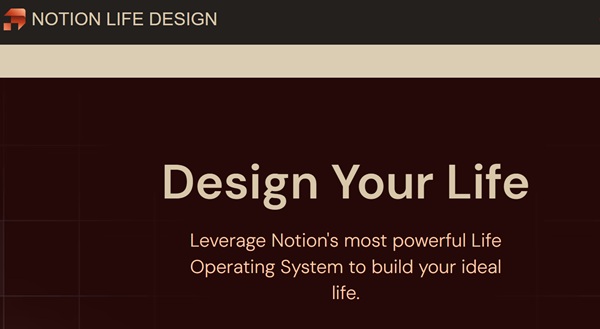
Notion Life Design
The emergence of Notion Life Design as a distinct methodology owes much to pioneers like August Bradley, who recognized the unparalleled potential of Notion as a platform for crafting comprehensive personal operating systems. Notion, with its fluid workspace, database capabilities, and ability to link disparate pieces of information, offers a blank canvas unlike any other productivity tool. It transcends the limitations of rigid, pre-defined applications, allowing users to build bespoke systems that adapt to their unique needs, goals, and workflows. This flexibility is critical for a truly integrated Life OS, as it enables the seamless fusion of task management, project planning, goal setting, knowledge management, and habit tracking within a single, interconnected environment.
For August Bradley, Notion wasn’t merely another tool; it was the ideal architectural substrate for bringing his ambitious Pillars, Pipelines & Vaults framework to life, transforming complex theoretical concepts into a tangible, actionable system for daily living. His work has demonstrated how a sophisticated understanding of Notion’s capabilities can lead to a powerful paradigm shift in how individuals organize and orchestrate their entire existence.
Notion as the Canvas – Bridging Aspiration and Action
Notion’s unparalleled flexibility and comprehensive feature set make it the quintessential canvas for ambitious frameworks like PPV, embodying the very essence of Notion Life Design. Unlike conventional tools that specialize in a single function, Notion offers a fluid workspace where databases, pages, templates, and linked views can be interwoven to create highly customized, interconnected systems. This architectural freedom allows users to transcend the limitations of siloed information, where tasks reside in one app, notes in another, and goals in yet a third. Instead, Notion facilitates a unified digital environment where every piece of information, every task, and every aspiration can be linked and contextualized within a broader framework. This inherent adaptability is crucial for the PPV system, enabling it to model the complex, multi-faceted nature of personal and professional life without forcing it into rigid, predefined structures.
The genius of PPV’s implementation on Notion lies in its ability to effectively bridge the infamous “execution gap” – the chasm separating knowing what to do from actually doing it. By leveraging Notion’s relational databases and linked views, August Bradley‘s system creates a transparent, visual map where high-level aspirations in the Pillars are directly linked to tangible projects in the Pipelines, which in turn are broken down into daily tasks. This intricate web ensures that individuals can always trace their daily actions back to their overarching purpose and values. The visual clarity and intuitive navigation provided by Notion mean that users aren’t just managing tasks; they are seeing how each small step contributes to a grander vision. This constant reinforcement of purpose fuels motivation and provides the structured accountability necessary to stay focused and aligned, transforming vague intentions into concrete progress within a dynamic Notion Life Design framework.
From a creative perspective, Notion, when utilized with the depth and foresight of the PPV framework, ceases to be merely a software application; it transforms into a personalized, dynamic control panel for one’s entire life. Imagine sitting at the helm of a sophisticated life-management dashboard, where every lever you pull, every dial you turn, directly influences your trajectory towards your desired future. This isn’t about rote task entry, but about intelligently orchestrating your time, energy, and focus. August Bradley‘s framework taps into Notion’s capabilities to give users this sense of command, allowing them to visualize connections between disparate parts of their life and make informed decisions with unparalleled clarity. It turns what could be a sterile database into a living, breathing reflection of one’s ambitions and progress, a truly remarkable testament to the power of thoughtful Notion Life Design.
The Evolution to PPV Pro – Rethinking Life OS for 2026
The Notion Life Design landscape has been in constant evolution alongside the Notion platform itself, and the PPV system, first conceived in 2019, has been at the forefront of this journey. The 2026 release of PPV Pro represents not just another update, but a significant technical and conceptual evolution, building upon six years of refinement and revolutionary changes to the Notion platform. This iteration is a testament to August Bradley‘s commitment to continuous improvement, ensuring the system remains cutting-edge and effective.
PPV Pro is rebuilt from the ground up, designed to leverage new Notion building fundamentals that have dramatically changed over the preceding 18 months. This signifies a deep understanding of the platform’s advanced capabilities, allowing the system to harness Notion’s latest enhancements for greater efficiency, robustness, and user experience. It reflects a proactive response to platform developments, rather than a reactive adaptation, solidifying its position as a benchmark for comprehensive Notion Life Design.
A particularly intriguing aspect of PPV Pro is its dual objective: to achieve simplification for the user while simultaneously increasing the depth of its life-shaping capabilities. This paradox – making something more powerful yet easier to use – is a hallmark of sophisticated design. The simplification doesn’t come from stripping away features, but from intelligently integrating and automating processes to reduce friction and cognitive load for the end-user.
By leveraging contemporary Notion architecture, complex operations can be streamlined, allowing individuals to focus more on their goals and less on managing the system itself. This means that while the underlying mechanics might be more advanced, the user experience becomes more intuitive, allowing for a deeper engagement with the transformative core of the PPV framework without getting bogged down in intricate configurations. This focus on simplifying the interface while enhancing the system’s profound impact on life-shaping and momentum-building reinforces August Bradley‘s dedication to practical, user-centric Notion Life Design.
From a creative insights perspective, the evolution of PPV to PPV Pro mirrors the iterative process of any sophisticated software development, where successive versions learn from previous implementations and leverage advancements in the underlying technology. It’s akin to a master craftsman continually refining their tools and techniques based on years of practice and feedback from thousands of users. This continuous refinement, shaped by the real-world experiences of a vast user base, ensures that PPV Pro isn’t just a theoretical construct but a practically proven solution.
It highlights how a framework, even one initially groundbreaking, must remain dynamic and responsive to both user needs and technological shifts to maintain its efficacy and market leadership. The 2026 version is a clear signal that August Bradley and his team are committed to pushing the boundaries of what is possible in Notion Life Design, ensuring the system remains relevant and continues to be a powerful engine for personal and professional transformation.
Beyond GTD – A New Paradigm for Productivity
Traditional productivity frameworks, such as Getting Things Done (GTD), have undoubtedly offered valuable contributions to personal organization, particularly in the realm of task management and mental decluttering. However, as the source material points out, such frameworks are cited as having inherent problems that the PPV system seeks to rectify. While GTD excels at capturing and processing tasks, its primary focus is often on managing the sheer volume of “stuff” rather than strategically aligning actions with profound life purpose.
The limitation often lies in its bottom-up approach; it helps individuals manage their to-do lists effectively but might not inherently provide the compass for ensuring those lists are filled with the right things. The overwhelming data of modern life, the constant distraction, and the deeply personal quest for meaning demand a framework that goes beyond merely “getting things done” to proactively “designing a life.” This is where August Bradley‘s PPV system offers a more holistic and future-oriented approach to Notion Life Design.
PPV distinguishes itself by prioritizing two primary drivers of progress: “Focus” and “Alignment.” These are not merely operational principles but philosophical cornerstones of the system. “Focus” is defined as the ability to ruthlessly zero in on necessary daily tasks, stripping away distractions and concentrating effort on what truly moves the needle. This is an active, deliberate stance, moving away from a reactive, impulse-driven existence. Complementing this is “Alignment,” which ensures that every daily action is directly derived from high-level aspirations. This means that an individual is not just busy, but busy with purpose, perpetually ensuring they are “doing the right things.” This top-down integration from Pillars (purpose) to Pipelines (action) is a critical differentiator, providing a fundamental compass missing in many purely task-oriented systems. It’s this intentional connection between daily diligence and grand vision that defines its advanced approach to Notion Life Design.
From a creative insight perspective, GTD was a groundbreaking paradigm in its time, offering a much-needed structure to manage the burgeoning information age. However, the world has evolved; the challenge is no longer just processing incoming data, but navigating an ocean of digital noise while simultaneously fostering deep personal growth and fulfilling high-level aspirations. One could argue GTD is akin to an excellent filing system; it helps you keep your papers in order. PPV, by contrast, is an architect’s blueprint for building a vibrant, purposeful life from the ground up, utilizing that filing system as one small, but integrated, component. It acknowledges that true productivity in the 21st century is less about managing a task inbox and more about cultivating a life where every action contributes to a larger narrative, a compelling vision that August Bradley has meticulously crafted into the PPV Life OS for comprehensive Notion Life Design.
Conclusion
The Architecting Momentum framework, underpinned by August Bradley‘s Pillars, Pipelines & Vaults (PPV) Life Operating System, stands as a definitive testament to the power of intentional Notion Life Design. It offers a meticulously crafted solution for navigating the complexities of modern productivity, moving individuals from a common state of fragmented efforts and quiet frustration to one of proactive momentum and sustained growth. By integrating foundational identity within its Pillars, providing clear execution pathways through its Pipelines, and fostering lasting wisdom in its Vaults, the PPV system – especially in its refined PPV Pro 2026 iteration – delivers a comprehensive, unified approach that transcends the limitations of traditional frameworks.
It empowers individuals to not only identify their highest aspirations but also to systematically translate them into daily actions, leveraging Notion’s flexible architecture to create a truly integrated Personal Knowledge Management experience. Ultimately, the central thesis championed by August Bradley asserts that success and progress are not fortuitous occurrences, but rather the deliberate outcome of a well-architected life, providing the necessary infrastructure for defining purpose, activating focus, breaking detrimental habits, and building the essential feedback loops for an ever-evolving journey of personal and professional excellence.
Sales Page:_https://www.notionlifedesign.com/
Delivery time: 12 -24hrs after paid